
Uncategorised
Wooden surfboard care and repair
Your beloved wooden surfboard, like any surfboard, needs to be well taken care of if it is going to last. After nearly 20 years making, surfing, and dinging my own wooden surfboards, I reckon I’m in an expert position to give some basic wooden surfboard care and repair tips. Trust me, I’ve damaged my fair share of wooden surfboards, and I’ve seen how clients have found some extraordinary inventive ways to damage boards. Some of these damages are just bad luck. If you’re surfing waves, there’s a large element of the experience that you can’t control. Wear and tear is inevitable.

As the saying goes, prevention is better than cure. The tips below are driven by that mantra. Experienced surfers will view these tips as part of their DNA, but aren’t immune from being careless and forgetting and can still do with a reminder. I find that beginner surfers who are not used to handling surfboards are particularly prone to dinging boards, and these tips can hopefully be useful for them too.
GET A BAG…So many dings happen traveling around with a surfboard. Taking it from where you store it and strapping it on the roof or putting it in your car. Taking it out. Putting it on the ground. It’s inevitable that you’ll have little knocks here and there. A bag might seem like an extra expense that you don’t want to incur on top of a new surfboard, but to quote another saying (that’s appropriate to getting a bag), a stitch in time saves nine. Fixing dings is expensive and time consuming and in the long run, wrapping your beloved stick in a bag will save you money.


If you are a beginner and not confident in controlling your surfboard try and find a quieter part of the beach to surf, for example. It’s crucial to know your limits. If you’re not a strong enough paddler to get out of the way of surfers riding incoming waves then think carefully about where you place yourself in the lineup in order to avoid damage to your board and putting other surfers at risk. If you’re surfing a rocky point or stretch of coastline, make sure that you know where the keyhole is for going out and, crucially, coming in. Perhaps there’s a sandy patch at the end of the point that might be safer to come in at.
A lot of dings happen through pure excitement – you arrive at the break, its cooking and you’re so excited to get in the water that you slip on the rocks or miss the keyhole and paddle yourself onto a rock. The nature of the wave is also important to consider. A crunching beach break can snap a foam longboard in two like a match stick; a wooden board might not snap but can still be damaged. Remember that a sandbank of compacted sand is pretty much as hard as a rock so you can’t be surprised if you nosedive into it and crack the decking, in the same way as if you drove your new car into a lamp post you’d dent the bodywork. The point of mentioning this is not to say that you shouldn’t surf a wave, but merely to point out that being aware of which parts of a wave are dangerous and to be cautious of can help prevent dings.
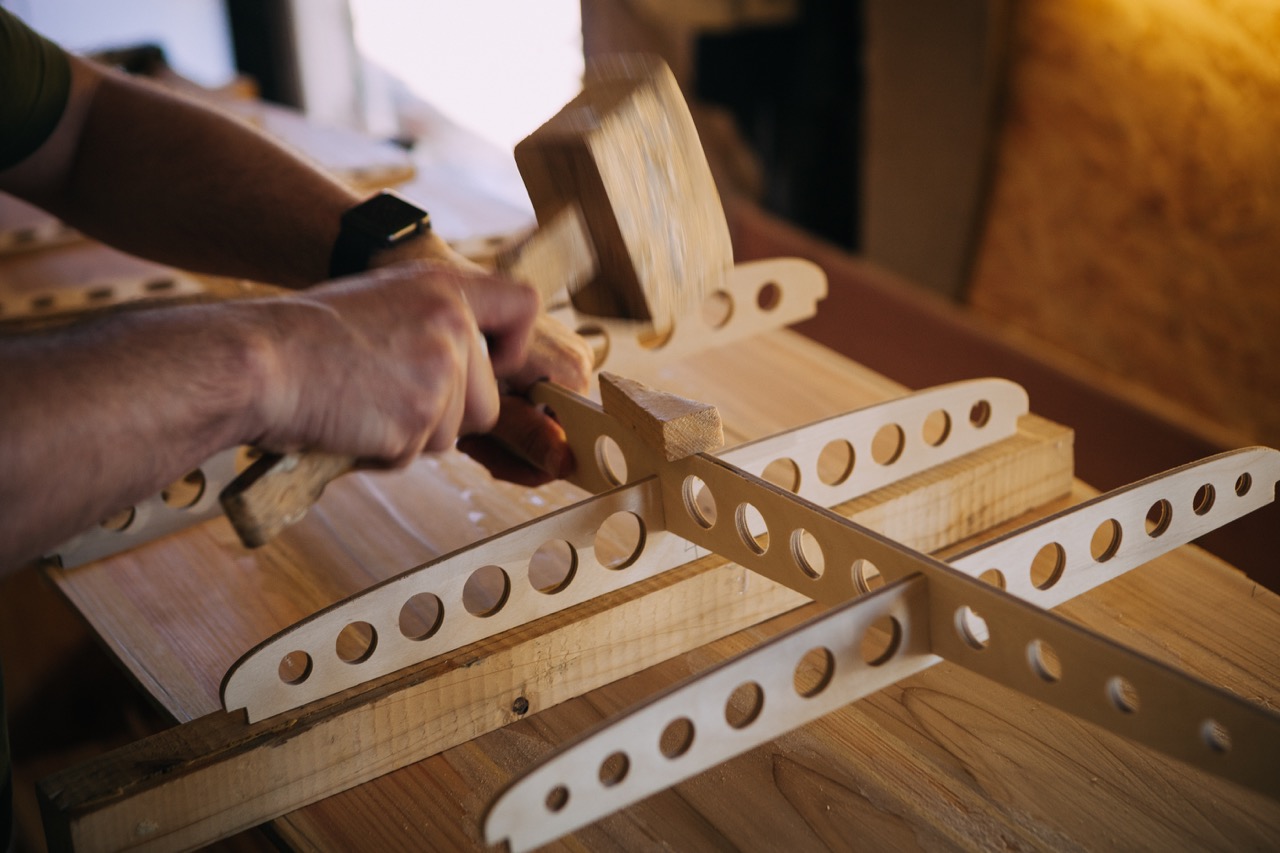
THE GOOD NEWS…Anything can be repaired. Smaller dings like shattering of the glassing, scratches and small gouges into the wood, for example, are easily repaired and depending on their severity might not even be visible after the repair. Larger dings such as cracked planking or larger punctures through the wood can also be fixed and while the repair may be visible this won’t matter for the functionality of the board. In worst case scenarios, whole planks can be replaced and the surfboard re-sanded and glassed again. However, to come back to the beginning, prevention is better than cure, and larger repairs are costly not because I am ever going to make any money out of them, but because of the cost of materials and the pure time it takes in labour.
IN CONCLUSION…I used to feel so very bleak when I dinged my own boards. Wooden boards take so much time and effort to make that I always felt like I wanted them to remain pristine, forever looking like they had just been finished. As time has gone by I’ve come to accept that this is completely and hopelessly unrealistic. If I surf a board, it is just a matter of time before I pick up a ding. But I can be more careful and considerate without compromising my surfing experience, and I can see those dings as a right of passage that give the board character and act as memories of sessions had and waves caught.

